
A Misa PFP can become an immediate visual signature in online spaces. Profile pictures have evolved beyond simple headshots into signals of taste, mood, identity, and belonging. A carefully chosen avatar can communicate character preferences and visual sensibilities before a username or message receives attention. The smallest image can still carry a recognizable personal tone.
On Discord, TikTok, Instagram, and gaming communities, avatars function as part of everyday visual branding. They appear beside comments, messages, posts, streams, and multiplayer profiles. This constant visibility gives profile images unusual social importance. A consistent avatar style can make an account feel more recognizable, while an inconsistent choice can make its visual identity feel disconnected.
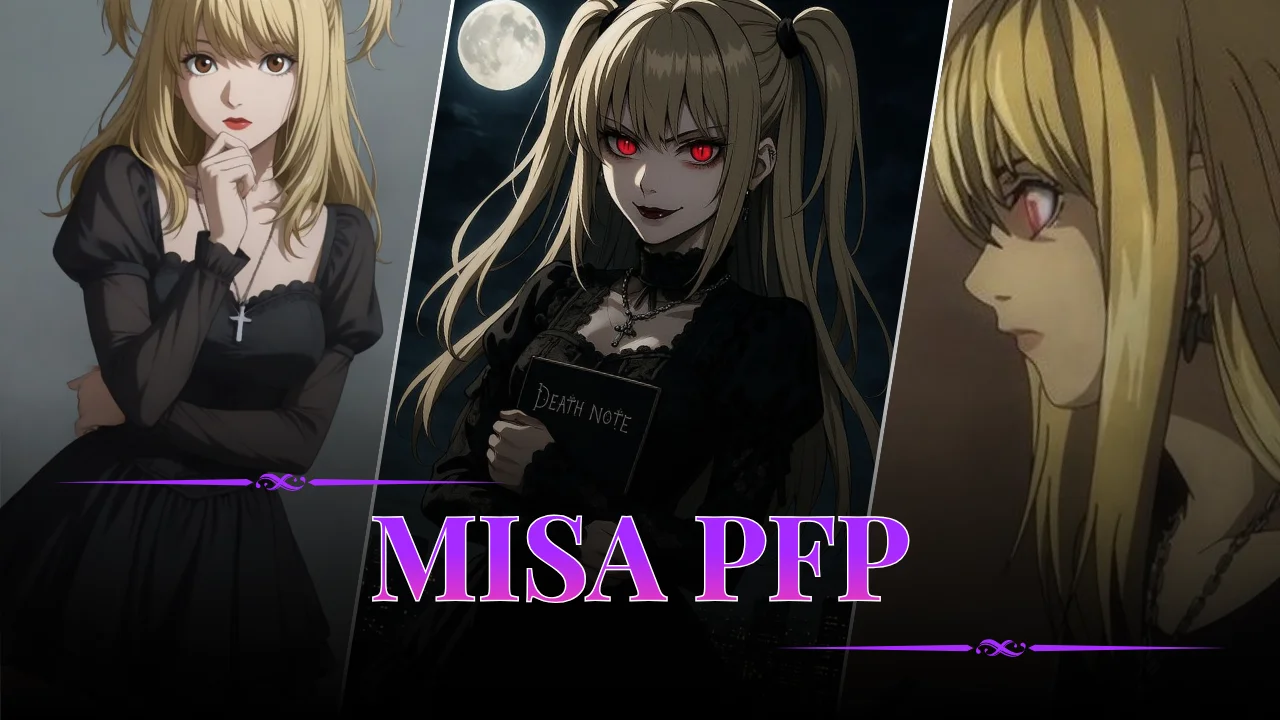
Misa Amane’s distinctive character design creates room for soft, gothic, dark, playful, and monochrome interpretations. Misa PFP styles often combine pale tones, black clothing, expressive eyes, dramatic contrast, and delicate compositions. These qualities suit broader anime, goth, emo, manga, and aesthetic categories. They also provide visual restraint within today’s crowded digital environments.
Table of Contents
- Misa PFP Aesthetic
- Misa PFP Anime
- Misa PFP Cute
- Misa PFP Cool
- Misa PFP Funny
- Misa PFP Sad
- Misa PFP Happy
- Misa PFP Smiling
- Misa PFP Crying
- Misa PFP Angry
- Misa PFP Dark
- Misa PFP Goth
- Misa PFP Emo
- Misa PFP Black and White
- Misa PFP Manga
- Misa PFP HD
- Misa PFP 4K
- Misa Wallpaper PFP
- Misa Matching PFP
- How To Choose The Right Misa PFP
- FAQs
- Conclusion
Misa PFP Aesthetic
Soft lighting, pale skin tones, delicate highlights, and controlled black accents define a Misa PFP Aesthetic. The compositions often place Misa against muted backgrounds, blurred textures, subtle gradients, or gentle shadows. Fine facial details remain visible while decorative elements stay secondary.
Gentle contrast keeps the character as the focal point. Pale highlights create visual openness. Black accents add definition without overwhelming the frame. Soft gradients introduce depth. Sparse backgrounds reduce distraction. The result feels delicate yet visually structured.
Misa PFP Anime
Classic anime styling preserves Misa Amane’s recognizable eyes, blonde hair, expressive face, and gothic clothing. A Misa PFP Anime composition usually uses clean linework, saturated character details, and a tightly cropped portrait. Backgrounds remain simple enough for small profile displays.
Anime linework keeps facial expression readable. Strong outlines improve recognition at reduced sizes. Blonde hair creates a clear focal area. Dark clothing establishes tonal balance. Expressive eyes add emotional information. Familiar character design also strengthens fandom recognition.
Misa PFP Cute
A Misa PFP Cute style softens the character through brighter expressions, rounded framing, pastel backgrounds, and playful details. Pink highlights, small hearts, gentle blush effects, and simplified facial features can create a lighter interpretation without removing the original gothic identity.
Rounded shapes make the composition feel approachable. Pastel accents reduce visual severity. Small decorative details add personality. Softer expressions create emotional warmth. Controlled contrast prevents the image from becoming visually busy. The familiar character remains recognizable despite stylistic changes.
Misa PFP Cool
A Misa PFP Cool composition usually emphasizes confident expressions, sharper shadows, dramatic cropping, and darker clothing. High contrast can separate the face from the background, while subtle red or purple accents introduce visual tension. The framing often feels cinematic rather than decorative.
Sharper contrast creates stronger visual authority. Side lighting adds dimensionality. Dark backgrounds increase facial emphasis. Limited accent colors guide attention. Close cropping makes the expression more prominent. Controlled shadows create a mature visual tone.
Misa PFP Funny
A Misa PFP Funny approach uses exaggerated expressions, unusual crops, visual reactions, or playful character moments. The composition may feature wide eyes, awkward expressions, comic framing, or intentionally unexpected details. Recognition depends heavily on facial expression and simple visual storytelling.
Exaggeration changes the character’s emotional register. Large expressions become readable at small sizes. Unexpected framing creates comic tension. Simple backgrounds keep the joke visually clear. Familiar character traits make the humor easier to understand. Minimal detail prevents the composition from becoming confusing.
Misa PFP Sad
A Misa PFP Sad composition relies on lowered expressions, subdued lighting, cool shadows, and restrained backgrounds. Tears, distant gazes, rain textures, and muted blue-gray tones can reinforce the emotional atmosphere. The framing usually leaves enough negative space for the mood to breathe.
Cooler tones create emotional distance. Reduced saturation softens visual intensity. Shadows emphasize facial expression. Negative space suggests isolation. Rain textures introduce symbolic melancholy. Subtle highlights prevent the portrait from becoming visually flat.
Misa PFP Happy
A Misa PFP Happy style uses bright expressions, open eyes, warm highlights, and lighter backgrounds. Blonde hair can become a dominant visual feature when paired with soft cream, pink, or white tones. The resulting composition feels more energetic while remaining character-focused.
Smiling expressions create immediate emotional clarity. Warmer lighting reduces perceived visual distance. Pale backgrounds increase brightness. Simple framing keeps attention on the face. Light accents create visual freshness. Controlled saturation prevents excessive visual noise.
Misa PFP Smiling
A smiling Misa PFP Smiling composition centers facial expression and eye detail. Soft illumination, clean cropping, and subtle background gradients allow the smile to remain the dominant feature. The style can range from faithful anime artwork to polished digital illustration.
A smile changes perceived character warmth. Bright eyes reinforce emotional openness. Clean outlines preserve facial clarity. Moderate contrast prevents the expression from disappearing. Simple backgrounds strengthen recognition. Small highlights add dimension around the eyes and hair.
Misa PFP Crying
A Misa PFP Crying style emphasizes tears, reflective eyes, lowered expressions, and cooler atmospheric tones. Close-up compositions make emotional details visible, while blurred backgrounds create separation around the face. Blue, gray, and muted violet tones frequently support the emotional setting.
Tears create a strong focal point. Reflections increase perceived depth in the eyes. Cooler tones reduce visual warmth. Blurred backgrounds create emotional isolation. Subtle shadows strengthen facial expression. Limited decoration keeps the emotional narrative direct.
Misa PFP Angry
An Misa PFP Angry design uses narrowed eyes, sharper shadows, strong facial angles, and dramatic cropping. Dark backgrounds can increase tension, while red or crimson accents provide controlled visual contrast. The composition often feels more graphic than soft.
Angular shadows intensify facial expression. Red accents introduce emotional urgency. Tight cropping increases psychological focus. Dark backgrounds create separation. Strong outlines improve recognition. Minimal decoration preserves the aggressive tone.
Misa PFP Dark
A Misa PFP Dark composition emphasizes black clothing, deep shadows, muted backgrounds, and selective highlights. Gothic details can include lace, crosses, dark textures, red accents, or nighttime environments. The character remains central while the surrounding palette becomes visually restrained.
Dark tones create strong tonal hierarchy. Bright facial areas become focal points. Black clothing reinforces gothic associations. Red accents introduce controlled tension. Negative space prevents the frame from feeling crowded. Subtle gradients add depth without reducing clarity.
Misa PFP Goth
A Misa PFP Goth style expands the character’s established gothic wardrobe through deeper blacks, lace textures, dramatic makeup, and dark romantic backgrounds. Burgundy, charcoal, violet, and black can create a layered palette without overwhelming the portrait.
Black establishes the dominant visual structure. Lace introduces tactile detail. Burgundy adds restrained warmth. Pale skin creates tonal contrast. Dark makeup reinforces the gothic theme. Ornamental details work best when kept near the edges.
Misa PFP Emo
An Misa PFP Emo composition often combines dark clothing, expressive eyes, cool shadows, and emotionally focused framing. Black, gray, deep purple, and muted red create a restrained palette. The portrait may include tears, distant expressions, headphones, or nighttime backgrounds.
Cool colors create emotional distance. Purple introduces a subdued accent. Dark clothing reinforces visual continuity. Close framing emphasizes expression. Soft grain can create nostalgic texture. Limited highlights maintain a subdued atmosphere.
Misa PFP Black and White
A Misa PFP Black and White design removes most color and relies on tonal contrast, linework, and expression. Manga-inspired shading, grayscale portraits, white backgrounds, and deep black clothing create a visually disciplined composition. The result emphasizes structure rather than decoration.
Monochrome simplifies the palette. High contrast improves small-screen visibility. Manga shading adds texture. White space creates breathing room. Black clothing provides visual weight. Facial expression remains the primary emotional signal.
Misa PFP Manga
A Misa PFP Manga style focuses on original-style linework, dramatic hatching, expressive eyes, and black-and-white tonal structure. Manga panels, close facial crops, and speech-bubble-inspired framing can add narrative character while retaining a compact profile format.
Linework creates strong visual identity. Hatching introduces depth without color. High contrast improves recognition. Panel framing adds storytelling. Expressive eyes preserve emotional clarity. Sparse backgrounds keep the composition readable.
Misa PFP HD
A Misa PFP HD image prioritizes sharp facial details, clean edges, smooth gradients, and balanced lighting. High-resolution artwork can preserve hair strands, eye highlights, clothing textures, and subtle shadows. The composition still needs strong framing for small profile displays.
Resolution preserves fine details. Clean edges improve perceived quality. Smooth gradients reduce visual harshness. Sharp eyes strengthen character recognition. Controlled lighting separates foreground and background. Excessive detail can still become unclear after resizing.
Misa PFP 4K
A Misa PFP 4K design begins with highly detailed artwork and strong compositional structure. Fine hair strands, eye reflections, fabric textures, and atmospheric backgrounds become more visible at higher resolutions. Clean focal hierarchy remains important despite the added detail.
Higher resolution preserves subtle texture. Fine gradients appear smoother. Facial details remain sharper during cropping. Background depth becomes easier to control. Excessive texture can still create noise. Strong focal points remain necessary for profile-sized displays.
Misa Wallpaper PFP
A Misa Wallpaper PFP adapts larger cinematic artwork into a compact avatar crop. Wallpaper scenes may include city lights, bedrooms, nighttime skies, gothic interiors, or dramatic character compositions. Successful crops preserve Misa’s face while retaining enough environmental context.
Wallpaper artwork provides greater visual depth. Background elements establish atmosphere. Cinematic lighting creates stronger hierarchy. Wide compositions require careful cropping. Facial placement determines avatar readability. Negative space can make circular crops easier.
Misa Matching PFP
A Misa Matching PFP set divides a coordinated visual composition between two or more profiles. Misa may appear alongside Light Yagami, another character, or a mirrored version of the same artwork. Consistent colors, framing, and illustration style create visual continuity.
Matching compositions rely on visual repetition. Shared backgrounds connect separate avatars. Mirrored poses create balance. Complementary colors establish relationship. Consistent cropping improves recognition. Character pairing adds narrative meaning.
How To Choose The Right Misa PFP
- Match brightness and contrast with the platform’s light or dark interface.
- Crop around the face for clear recognition in circular displays.
- Choose a mood that complements the profile’s overall content theme.
- Keep the dominant palette consistent across major social platforms.
- Avoid excessive details that disappear after avatar resizing.
- Match the character’s tone with the username and bio style.
- Prefer strong focal points over complicated background compositions.
- Test facial clarity at the smallest expected profile size.
FAQs
Why do minimal PFP styles often look more professional?
Minimal profile pictures preserve a clear focal point and remain recognizable at small sizes. Consistent contrast and restrained decoration also create a more intentional visual identity.
Are stylized anime avatars appropriate for professional profiles?
Stylized avatars can work when the platform and audience support personal or creative branding. A restrained Misa PFP is generally more suitable for informal, creative, fandom, or gaming environments than highly formal business profiles.
Can a specific PFP style affect engagement?
An avatar can influence recognition and the perceived tone of an account. Clear expressions, strong contrast, and consistent visual themes may make profiles easier to identify across repeated interactions.
Should a PFP match the account’s content theme?
Matching the avatar with the content theme creates stronger visual consistency. Anime, gothic, manga, gaming, or alternative content can benefit from an avatar that reflects the same visual language.
How often should a profile picture be changed?
There is no fixed schedule for changing an avatar. Keeping a recognizable image for longer periods can strengthen identity, while occasional changes can reflect evolving interests or seasonal themes.
Conclusion
A carefully composed Misa avatar can turn a small profile image into a recognizable identity marker. Calm palettes, controlled contrast, expressive framing, and intentional mood allow the character to adapt across Discord, Instagram, TikTok, gaming communities, and fandom spaces. The broad range of anime, cute, gothic, manga, and monochrome styles also provides flexibility without losing character recognition.
Minimal visual tones tend to age well because they rely on composition rather than temporary decoration. Different expressions, palettes, and categories can gradually refine an account’s visual language. When character identity, mood, and platform context remain aligned, a Misa PFP becomes a polished and recognizable part of an online profile.