
An Itachi Uchiha PFP turns a profile image into more than a simple identifier. Online avatars have evolved from basic headshots into visual signals of taste, mood, and belonging. Composition, color, expression, and character choice now communicate identity before a profile description is even read.
Discord, TikTok, Instagram, and gaming communities have normalized visual branding through avatars. A profile image can establish tone before the first message appears. Anime communities use recognizable characters to signal fandom and shared interests. Consistent imagery also helps profiles remain recognizable across feeds, chats, servers, and competitive gaming spaces.
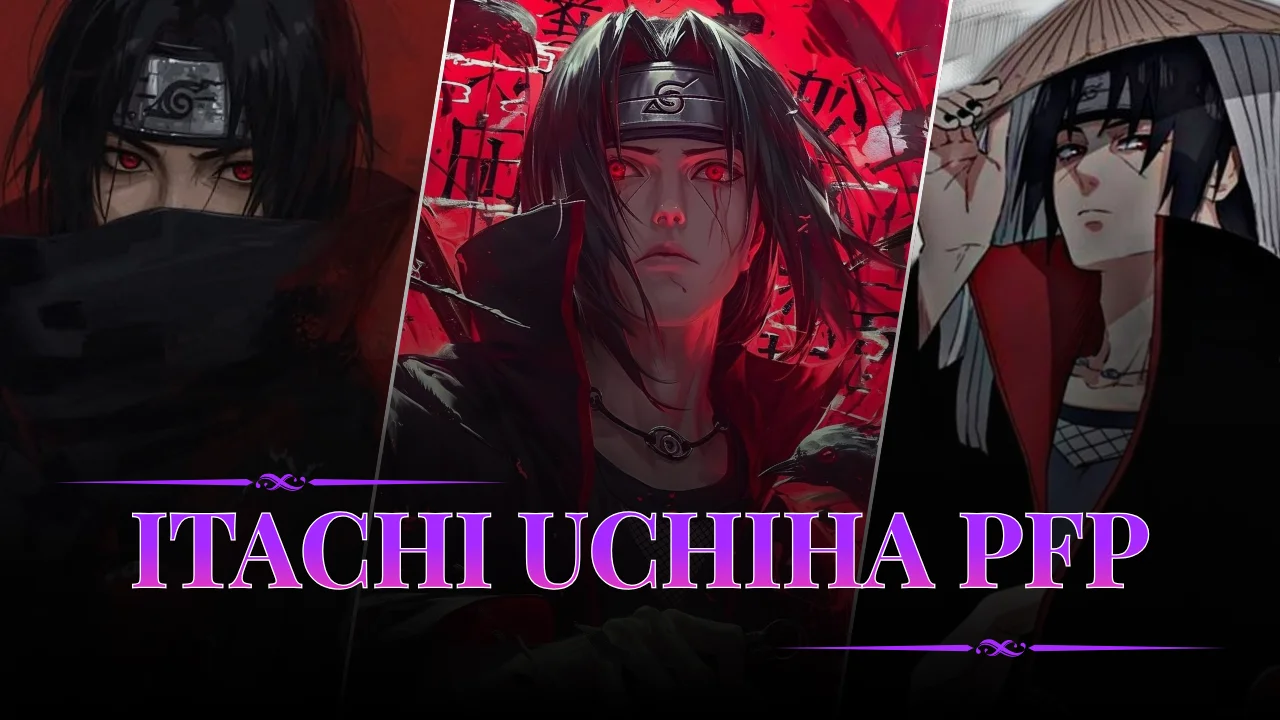
Itachi Uchiha fits this visual culture through restrained colors, dramatic shadows, and expressive compositions. Black, red, muted gray, and negative space create a controlled visual language. The Itachi Uchiha PFP category therefore spans cool, dark, sad, funny, manga, and minimalist interpretations without losing its recognizable character identity.
Table of Contents
Naruto Itachi PFP
Naruto Itachi PFP designs place Itachi within the wider visual language of the Naruto universe. Character portraits often include the Akatsuki cloak, Sharingan eyes, forehead protector, or subtle village references. Dark backgrounds keep attention centered on the face.
The Naruto connection adds recognizable fandom context. Familiar costume details communicate the source without requiring text. Red accents establish tonal contrast. Black framing creates visual depth around pale facial features. Controlled lighting supports the character’s serious narrative identity.
Itachi PFP Aesthetic
An Itachi PFP aesthetic often uses black, charcoal, muted red, and subtle gray. Soft grain, controlled shadows, and negative space create a restrained composition. Portraits may use blurred backgrounds or cinematic lighting rather than detailed scenery.
The aesthetic depends on tonal balance. Dark areas frame the character without overwhelming facial details. Red accents create a visual rhythm around the eyes or clothing. Grain can introduce texture without adding clutter. Negative space allows the focal point to remain isolated. The result feels cohesive and editorial.
Itachi PFP Anime
Itachi PFP Anime designs retain the clean linework and expressive shading associated with Japanese animation. Facial crops, Sharingan details, and dark hair provide strong recognition. Backgrounds range from simple gradients to atmospheric scenes.
Anime linework supports clarity at reduced sizes. Strong outlines separate the character from the background. Red eye details establish an immediate focal point. Soft gradients prevent the composition from appearing flat. Controlled highlights preserve facial expression without excessive detail.
Itachi PFP Cute
Itachi PFP Cute interpretations soften the character through chibi proportions, rounded features, lighter expressions, or simplified clothing. Muted reds and warm neutrals can replace the heavier black palette. Small decorative details remain secondary to the character.
The contrast between a serious character and simplified proportions creates visual irony. Rounded shapes reduce perceived intensity. Larger eyes emphasize expression. Simplified shadows make the image easier to read. Soft backgrounds reinforce the lighter tone. The result retains character recognition while changing its emotional register.
Itachi PFP Cool
Itachi PFP Cool designs rely on confident expressions, cinematic lighting, and strong framing. Dark clothing contrasts with red Sharingan details. Cropped shoulders, angled faces, and atmospheric backgrounds create a controlled sense of movement.
Coolness here comes from composition rather than excessive decoration. Strong diagonal framing creates energy. Low-key lighting adds depth around the face. Red accents provide visual tension. Minimal backgrounds prevent competing focal points. Sharp facial expression reinforces the character’s established identity.
Itachi PFP Funny
Itachi PFP Funny designs reinterpret familiar expressions through exaggerated faces, unexpected captions, or simplified meme compositions. Some use chibi proportions or unusual poses. Strong facial expressions usually carry the humor more effectively than complex backgrounds.
Comedy changes the character’s established emotional tone. Exaggerated eyes create immediate visual emphasis. Unexpected expressions introduce contrast with Itachi’s normally serious presentation. Simplified framing keeps the joke readable. Minimal backgrounds allow facial comedy to remain dominant.
Itachi PFP Sad
Itachi PFP Sad designs emphasize downcast expressions, subdued lighting, and cool gray or deep red tones. Rain, shadows, blurred backgrounds, and solitary framing frequently appear. The character is often positioned away from the visual center to create emotional space.
Muted contrast supports a quieter mood. Gray tones reduce visual intensity. Shadows conceal portions of the face. Negative space suggests isolation. Rain textures introduce subtle movement. Red accents can preserve narrative tension without overwhelming the composition.
Itachi PFP Angry
Itachi PFP Angry imagery focuses on narrowed eyes, stronger facial shadows, and intense red Sharingan details. Dark backgrounds increase the apparent contrast. Cropped faces often make the expression the dominant visual element.
Anger depends heavily on facial geometry and tonal contrast. Deep shadows sharpen the brow and jawline. Red eyes establish a high-energy focal point. Close cropping removes distracting scenery. Hard lighting creates sharper edges. The composition communicates intensity without requiring additional graphics.
Itachi PFP Dark
Itachi PFP Dark compositions use deep blacks, charcoal shadows, muted crimson, and limited highlights. Silhouettes and atmospheric backgrounds can surround the character. The overall image remains restrained rather than densely decorated.
Dark palettes create strong figure-ground separation when highlights are placed carefully. Black areas absorb secondary details. Crimson becomes a selective accent. Soft gradients prevent harsh visual transitions. Negative space creates breathing room. Controlled contrast keeps the face recognizable despite the low-key palette.
Itachi PFP Badass
Itachi PFP Badass designs emphasize commanding expressions, dramatic poses, and concentrated red accents. Akatsuki imagery, Sharingan effects, and cinematic shadows frequently reinforce the composition. Backgrounds tend to remain dark and atmospheric.
Visual authority comes from framing and posture. Low-angle perspectives can increase perceived presence. Strong eye contact creates a direct focal point. Controlled highlights separate the face from dark surroundings. Red effects introduce visual energy. Minimal background detail prevents the image from becoming crowded.
Itachi PFP HD
Itachi PFP HD designs prioritize sharp facial details, clean linework, and controlled image quality. Hair strands, cloak textures, eye details, and subtle shading remain visible without excessive compression. Balanced lighting supports clarity on modern screens.
High resolution becomes useful when small details influence recognition. Sharp edges preserve facial structure. Clean gradients prevent visible banding. Fine textures add depth without becoming distracting. Clear eyes remain important at reduced sizes. Strong source quality also helps circular crops retain definition.
Itachi PFP 4K
Itachi PFP 4K imagery offers exceptionally detailed source material for avatars and related graphics. Fine hair strands, eye patterns, cloak textures, and atmospheric effects can appear more defined. Dark backgrounds still provide the strongest contrast.
Resolution alone does not determine avatar quality. Composition remains important after resizing. Fine details may disappear in small circular displays. Strong focal points survive reduction better than intricate scenery. Clean edges preserve character recognition. High-resolution sources therefore work best when paired with disciplined framing.
Itachi PFP Black And White
Itachi PFP Black And White designs remove most color while preserving facial structure, linework, and contrast. Ink-like shading, grayscale portraits, and manga-inspired textures are common. Red Sharingan details may be removed for a fully monochrome effect.
Monochrome imagery creates visual discipline through tonal contrast. Bright highlights define facial planes. Deep blacks frame the silhouette. Gray transitions create depth without relying on hue. The absence of color shifts attention toward expression and composition. Fine linework becomes more visually significant.
Itachi PFP Manga
Itachi PFP Manga designs draw from the visual language of Naruto’s printed artwork. Ink shading, panel crops, screentones, and expressive linework define the style. Black-and-white compositions often place the face or eyes at the center.
Manga artwork has a distinct graphic structure. Heavy ink creates immediate tonal contrast. Screentones introduce texture without color. Panel framing can provide narrative context. Strong linework remains readable after cropping. The limited palette gives the avatar a documentary quality.
How To Choose The Right Itachi Uchiha PFP
- Match brightness and contrast with the platform’s light or dark interface.
- Choose a close crop that remains recognizable inside circular displays.
- Select a mood that complements the profile’s overall content theme.
- Keep the color palette consistent across major social platforms.
- Avoid intricate backgrounds that disappear when the avatar is resized.
- Align the character’s visual tone with the username and bio style.
- Check eye and facial clarity before using heavily edited artwork.
- Prefer balanced negative space around the central character.
FAQs
Why do minimal PFP styles look more professional?
Minimal avatars maintain clear focal points and avoid unnecessary visual clutter. Their simple compositions also remain recognizable across different display sizes.
Are stylized anime avatars appropriate for professional profiles?
Stylized avatars can work in informal professional communities, creative spaces, and personal brands. Traditional headshots remain more conventional for formal business contexts.
Can a PFP affect profile engagement?
A recognizable and visually coherent avatar can improve profile identification across repeated interactions. Engagement itself depends on many factors beyond profile imagery.
Should a profile picture match its content theme?
Visual alignment can make an account feel more cohesive and intentional. Character, color, and mood can reinforce the subjects represented in posts or videos.
How often should profile pictures be changed?
There is no fixed schedule because consistency can be more valuable than frequent changes. Updates make sense when the profile’s visual identity or content direction changes.
Conclusion
A carefully composed Itachi avatar demonstrates how a restrained palette can turn a small image into a strong identity marker. Balanced shadows, recognizable expressions, and controlled negative space work across Discord, Instagram, TikTok, gaming communities, and anime fandom spaces. Different interpretations allow the same character to communicate distinct moods.
Minimal tones also tend to age well because they rely on composition rather than temporary visual effects. Exploring manga, monochrome, cute, dark, cinematic, and expressive categories can gradually refine a consistent profile identity. Across platforms, an Itachi Uchiha PFP remains most effective when its mood, palette, and composition create a recognizable and visually aligned profile.