
A Fallout PFP turns an online profile into a small visual statement. Profile pictures have evolved beyond simple headshots into signals of taste, mood, identity, and belonging. A carefully chosen avatar can suggest interests before a username is understood. Composition, color, and subject now function as part of digital self-expression.
Discord, TikTok, Instagram, and gaming communities have made visual branding increasingly ordinary. Avatars establish recognition across conversations, servers, feeds, and competitive spaces. A profile image communicates personality before any message is read. The choice can suggest humor, nostalgia, seriousness, creativity, or affiliation with a particular fictional world.
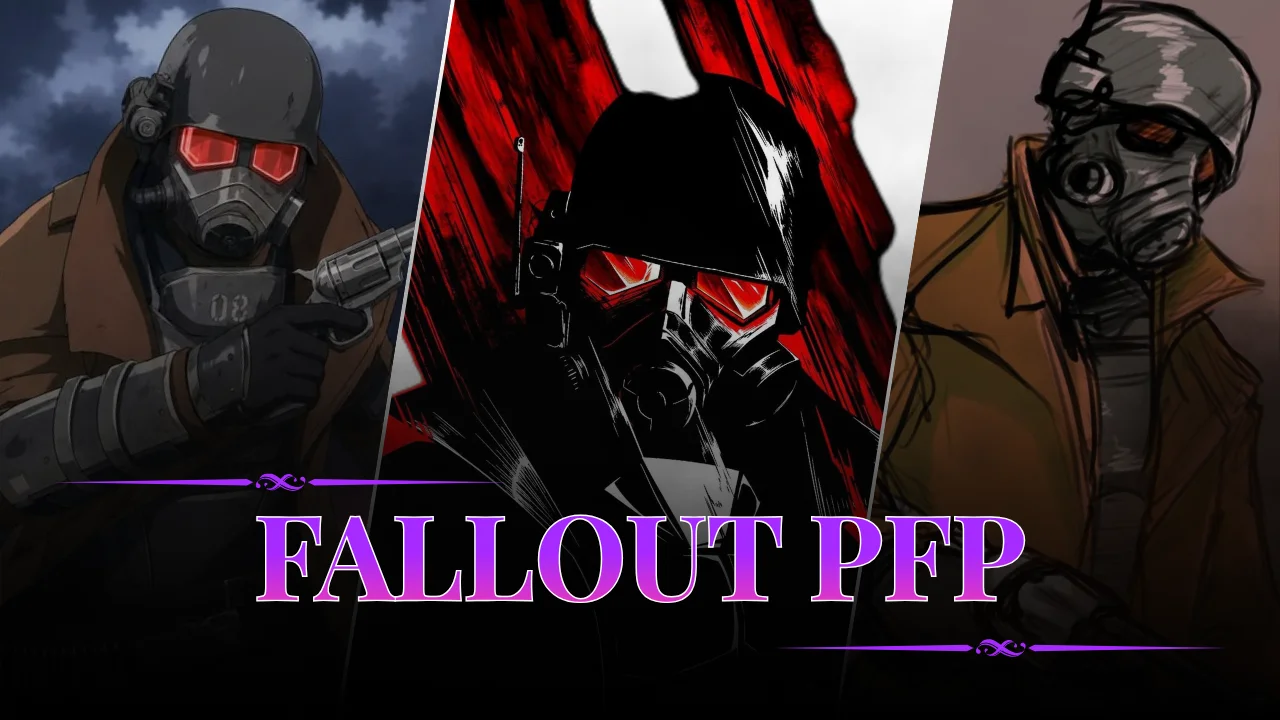
The Fallout PFP Aesthetic fits this environment through muted colors, retro-futurist imagery, weathered textures, and deliberate visual contrast. Rusted landscapes create atmosphere. Vault imagery introduces geometric simplicity. Character portraits provide emotional focus. These qualities extend across Fallout New Vegas, Fallout 4, Fallout 76, meme imagery, Power Armor, and darker post-apocalyptic styles.
Table of Contents
- Fallout PFP Aesthetic
- Fallout PFP Girl
- Fallout New Vegas PFP
- Fallout 4 PFP
- Fallout 3 PFP
- Fallout 1 PFP
- Fallout 2 PFP
- Fallout 76 PFP
- Fallout PFP Ideas
- Fallout PFP Cute
- Fallout PFP Power Armor
- Fallout PFP GIF
- Fallout PFP 4K
- Fallout PFP Meme
- Fallout PFP Vault Boy
- The Ghoul Fallout PFP
- Lucy Fallout PFP
- Yes Man Fallout PFP
- Matching Fallout PFP
- Fallout PFP Discord
- How To Choose The Right Fallout PFP
- FAQs
- Conclusion
Fallout PFP Aesthetic
Muted greens, dusty browns, faded yellows, and charcoal shadows define the Fallout PFP Aesthetic. Vault interiors often provide clean geometric backgrounds. Wasteland scenes introduce cracked surfaces and atmospheric haze. Character portraits create a clear focal point against distressed environmental textures.
The palette carries a sense of age and technological decay. Warm highlights contrast with radioactive greens and dark shadows. Weathered textures suggest history without overwhelming the subject. Retro-futurist symbols reinforce the series identity. Negative space keeps complicated scenes readable. The overall mood feels nostalgic, isolated, and slightly uncanny.
Fallout PFP Girl
Female character portraits bring a more human focus to the Fallout visual language. Soft facial lighting can contrast with damaged landscapes and industrial backgrounds. Vault clothing, wasteland outfits, and retro styling provide distinct visual cues without excessive detail.
The contrast between character softness and harsh surroundings creates emotional tension. Warm skin tones stand out against green-gray environments. Subtle shadows add narrative depth. Simple framing keeps facial expression dominant. Weathered backgrounds imply survival and distance. The result can feel resilient without becoming visually aggressive.
Fallout New Vegas PFP
Fallout New Vegas PFP designs often emphasize desert colors, Western silhouettes, and casino-inspired imagery. Sandy backgrounds create a warm visual field. Character portraits can feature the Courier, factions, or recognizable Mojave locations. Sepia tones reinforce the game’s older visual identity.
The visual language combines dryness with theatrical contrast. Deep shadows make desert scenes feel more dramatic. Neon details introduce controlled color against muted surroundings. Faction symbols create strong graphic focal points. The Courier represents anonymity and choice. New Vegas imagery therefore carries both nostalgia and narrative ambiguity.
Fallout 4 PFP
A Fallout 4 PFP commonly uses Vault imagery, Commonwealth characters, Power Armor, or familiar post-apocalyptic environments. Blue Vault-Tec elements provide recognizable color contrast. Darker backgrounds emphasize character silhouettes. Environmental scenes introduce ruined architecture and overgrown streets.
The palette balances cool blue with rust, gray, and faded earth tones. Strong silhouettes remain legible at small sizes. Vault motifs introduce visual order. Power Armor creates a heavy geometric focal point. Character portraits provide more emotional nuance. This combination makes Fallout 4 imagery adaptable to both bright and dark interfaces.
Fallout 3 PFP
Fallout 3 PFP imagery often carries a darker, more subdued visual character. Capital Wasteland landscapes provide gray skies, damaged buildings, and muted green tones. Vault imagery creates cleaner compositions. Character portraits add a human focal point to otherwise bleak environments.
The darker palette creates psychological weight. Gray skies imply isolation. Green radiation tones introduce subtle unease. Broken architecture adds texture without requiring bright colors. Vault symbols provide graphic simplicity. These elements make Fallout 3 imagery feel restrained and atmospheric rather than visually crowded.
Fallout 1 PFP
Fallout 1 PFP designs draw from the series’ original retro-computer aesthetic. Pixelated graphics, limited color palettes, and classic character artwork create a distinctly historical appearance. Vault imagery and early interface elements can provide compact graphic compositions.
The limited palette creates strong visual hierarchy. Pixel edges remain recognizable at small dimensions. Minimal shading gives subjects a graphic quality. Retro typography can suggest an older technological era. Simple backgrounds prevent visual competition. The aesthetic therefore communicates nostalgia through restraint rather than complexity.
Fallout 2 PFP
Fallout 2 PFP concepts expand the original retro aesthetic with tribal, wasteland, and character-driven imagery. Desert environments dominate many compositions. Muted browns, dusty yellows, and dark outlines provide visual continuity. Classic character artwork adds personality.
The visual language feels more expressive than purely minimalist. Strong outlines separate figures from backgrounds. Earth tones create a sense of age and exposure. Small graphic details suggest a larger world. Humor can also appear through recognizable character expressions. The result combines retro identity with unconventional storytelling.
Fallout 76 PFP
Fallout 76 PFP designs often feature Appalachian landscapes, Vault imagery, characters, and recognizable multiplayer elements. Blue-and-yellow Vault-Tec colors create clear visual branding. Forest greens introduce a softer environmental palette. Character portraits can add warmth to the composition.
The multiplayer setting changes the emotional character of the imagery. Bright environmental colors can reduce the sense of isolation. Vault symbols create immediate franchise recognition. Group-oriented scenes suggest community and exploration. Power Armor introduces a strong mechanical focal point. Contrasting colors help avatars remain visible against dark interfaces.
Fallout PFP Ideas
Fallout PFP Ideas can range from character portraits to faction symbols, Power Armor, memes, and environmental scenes. Some compositions use a centered face. Others rely on silhouettes or recognizable logos. Distressed textures can provide atmosphere without obscuring the focal point.
Variation keeps the visual category broad. Dark compositions create mystery. Warm desert tones suggest the Mojave. Blue Vault imagery feels cleaner and more nostalgic. Green radiation accents introduce tension. Minimal portraits create stronger recognition at small sizes. Graphic symbols work when photographic scenes become too detailed.
Fallout PFP Cute
A Fallout PFP Cute approach softens the franchise’s harsher visual language through rounded illustrations, pastel accents, expressive characters, and simplified backgrounds. Vault Boy can appear with softer proportions. Animal companions and friendly character expressions can create a gentler composition.
The contrast between cute styling and post-apocalyptic themes creates visual irony. Rounded shapes reduce perceived aggression. Pastel colors soften the traditional wasteland palette. Simplified textures improve clarity. Small expressions become important focal points. The result feels playful while retaining recognizable Fallout references.
Fallout PFP Power Armor
Power Armor creates one of the strongest silhouettes in Fallout PFP design. Metallic surfaces, illuminated helmets, heavy shoulders, and mechanical joints provide immediate visual structure. Dark backgrounds can isolate the armor and increase recognition.
Mechanical geometry gives these images visual authority. Hard edges create strong tonal contrast. Reflections add controlled highlights. Helmet lights become natural focal points. Metallic textures imply weight and durability. Minimal backgrounds prevent armor details from becoming indistinct at small sizes.
Fallout PFP GIF
A Fallout PFP GIF introduces motion through blinking lights, animated radiation effects, character movement, or subtle environmental loops. The strongest examples keep animation restrained. Small movements preserve clarity rather than competing with the subject.
Motion changes how the image is perceived. Repeating light creates a technological feeling. Slow environmental movement can suggest atmosphere. Flickering effects reinforce radioactive themes. Character animation can create personality. Excessive movement, however, can weaken visual hierarchy and reduce readability.
Fallout PFP 4K
Fallout PFP 4K designs emphasize high-resolution character portraits, cinematic landscapes, detailed armor, and environmental textures. Sharp surfaces reveal rust, scratches, fabric, and atmospheric lighting. Strong focal points remain essential despite increased detail.
High resolution improves texture but does not automatically improve composition. Excessive background detail can disappear when reduced to avatar size. Controlled depth keeps the subject readable. Contrast separates faces from environments. Fine textures create visual richness when supported by simple framing. Cropping remains important even with large source images.
Fallout PFP Meme
Fallout PFP Meme designs use recognizable characters, expressions, captions, or absurd situations to create humorous identity signals. Vault Boy provides a particularly flexible visual base. Character reactions can communicate humor without relying on long text.
Meme imagery depends on immediate recognition. Familiar faces reduce the time needed to understand the joke. Exaggerated expressions increase emotional clarity. Simple backgrounds prevent competing details. Irony often comes from placing serious Fallout imagery in ordinary or humorous contexts. The strongest designs remain readable even when reduced to small circles.
Fallout PFP Vault Boy
Vault Boy remains one of the most recognizable visual symbols in the Fallout universe. His illustrated poses, blue-and-yellow clothing, and expressive gestures create compact compositions. Simple backgrounds allow the character to remain visually dominant.
The illustration style combines retro advertising with satirical optimism. Bright colors contrast with darker post-apocalyptic themes. Exaggerated gestures communicate emotion quickly. Thick outlines preserve clarity at small sizes. The character also carries strong franchise recognition without requiring environmental context. This makes Vault Boy particularly effective as an avatar.
The Ghoul Fallout PFP
The Ghoul Fallout PFP focuses on weathered facial textures, dramatic shadows, worn clothing, and cinematic lighting. Strong close-ups make facial details the central feature. Dark backgrounds often isolate the character from surrounding environments.
Texture carries much of the emotional weight. Weathered skin creates immediate visual history. Harsh lighting emphasizes facial structure. Muted clothing supports the face as the focal point. Warm highlights can contrast with cool shadows. The result feels cinematic, mature, and slightly unsettling.
Lucy Fallout PFP
Lucy Fallout PFP designs often emphasize clean Vault aesthetics, bright expressions, and a contrast between sheltered environments and wasteland surroundings. Blue-and-yellow clothing provides immediate visual recognition. Softer lighting can create a more approachable character portrait.
The visual contrast reflects Lucy’s narrative position. Clean colors suggest order and optimism. Wasteland textures introduce uncertainty. Bright facial lighting creates emotional openness. Blue clothing separates the character from darker backgrounds. The tension between innocence and survival gives the imagery additional narrative depth.
Yes Man Fallout PFP
Yes Man Fallout PFP designs rely on a distinctive face, bright colors, and expressive artificial personality. The character’s screen-like appearance creates a naturally centered composition. Simple backgrounds help preserve his recognizable visual identity.
The design works through contrast between friendliness and artificiality. Bright facial elements draw attention quickly. Clean geometric shapes support recognition. Expression communicates exaggerated enthusiasm. Dark backgrounds make the face feel more luminous. The combination creates an unusual but highly identifiable avatar style.
Matching Fallout PFP
Matching Fallout PFP designs use related characters, factions, poses, or color palettes across multiple profiles. One avatar may feature a Vault resident while another uses Power Armor. Coordinated framing creates the strongest visual connection.
The concept works through repetition rather than identical imagery. Shared colors establish continuity. Similar cropping makes paired avatars feel deliberate. Complementary characters introduce narrative relationships. Matching backgrounds create additional cohesion. Simple compositions remain easier to recognize when displayed together.
Fallout PFP Discord
Fallout PFP Discord designs need to remain recognizable within small circular displays. Character faces, Vault symbols, Power Armor helmets, and simplified illustrations generally perform better than crowded scenes. Dark backgrounds can provide strong separation in Discord’s interface.
Small-scale viewing changes the design priorities. Central subjects become more important. High contrast protects facial and graphic details. Excessive text becomes difficult to read. Strong silhouettes survive resizing better than complex landscapes. Limited palettes also create cleaner server-level visual harmony.
Discord communities use avatars as subtle indicators of fandom and personality. Fallout-themed servers can coordinate profile images with custom icons. Gaming groups may use faction imagery to distinguish members. Matching avatars can create a shared identity. A Fallout PFP Discord style should therefore balance personal expression with community context.
How To Choose The Right Fallout PFP
- Match brightness and contrast with the platform’s light or dark interface.
- Choose centered subjects that remain recognizable inside circular crops.
- Align the avatar’s mood with the profile’s overall content theme.
- Keep colors consistent across Discord, Instagram, TikTok, and gaming profiles.
- Avoid excessive detail that disappears when the image is resized.
- Match avatar styling with the username, banner, and bio tone.
- Prefer strong silhouettes when the profile image appears very small.
- Test the image as a thumbnail before finalizing the composition.
FAQs
Why do minimal PFP styles often look more professional?
Minimal avatars maintain clear focal points and remain readable at small sizes. Their restrained composition also creates a more deliberate visual identity.
Are stylized Fallout avatars appropriate for professional social profiles?
Stylized avatars can work when the platform allows personal branding and creative imagery. Simpler character portraits are generally more adaptable than heavily humorous or chaotic designs.
Can a PFP style affect profile engagement?
An identifiable avatar can improve recognition when users encounter the same account repeatedly. Engagement still depends primarily on content, interaction, and audience relevance.
Should a Fallout avatar match the profile’s content?
Visual alignment usually creates a more coherent profile identity. Gaming, fandom, retro, and entertainment accounts can benefit particularly from matching avatar and content themes.
How often should a profile picture be changed?
There is no fixed schedule because consistency can be more valuable than frequent changes. Changing an avatar after a major content or aesthetic shift can help preserve visual relevance.
What makes a gaming PFP recognizable?
A strong silhouette, clear subject, and sufficient contrast usually survive small displays well. Franchise-specific characters and symbols can also communicate community affiliation immediately.
Conclusion
A well-designed Fallout PFP transforms a small digital square into a recognizable identity marker. Muted palettes, balanced composition, retro-futurist details, and deliberate moods give the imagery a distinct visual language. The approach remains versatile across Discord, gaming communities, Instagram, TikTok, Pinterest, and fandom spaces.
Minimal tones also tend to age well because they rely on composition rather than temporary visual effects. Different character, game, faction, and illustration categories allow profiles to develop more specific identities over time. When palette, subject, and framing remain aligned, the Fallout PFP becomes both recognizable and visually polished.