
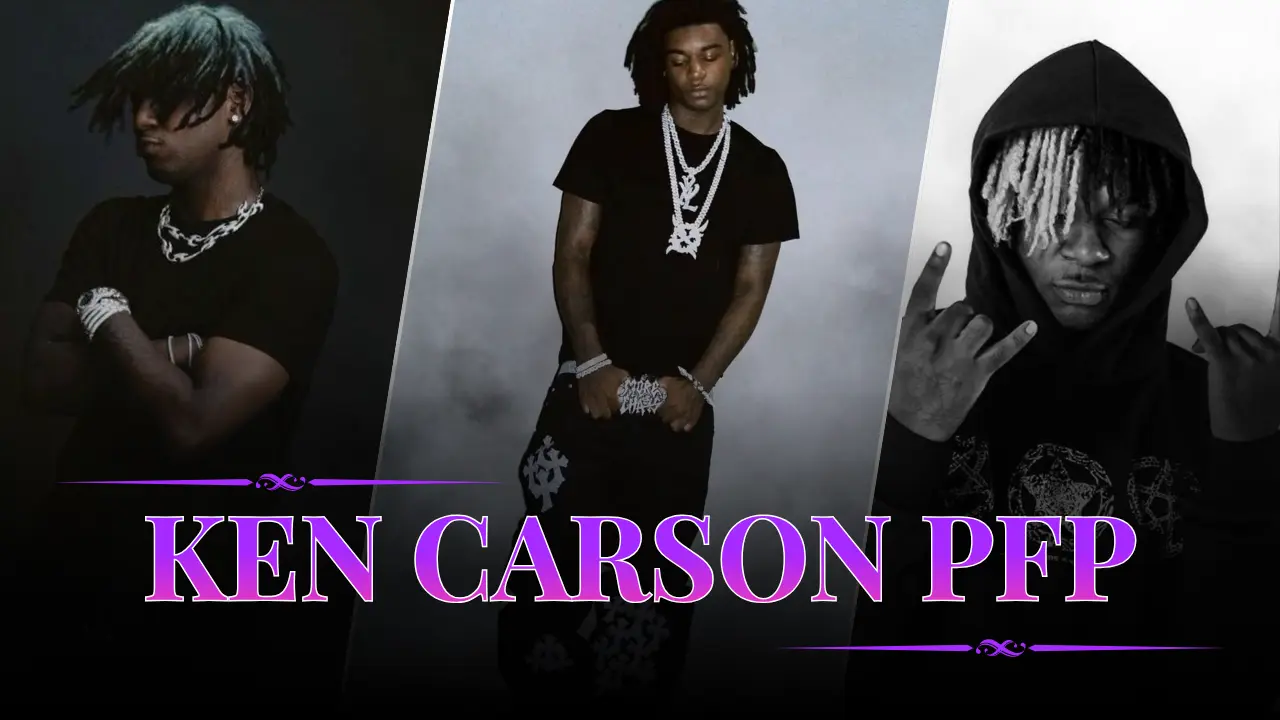
This Ken Carson PFP collection gathers 45 avatars of the Atlanta rapper signed to Playboi Carti’s Opium label, sorted by style: 4K photos, black-and-white edits, memes, Pinterest picks and social-media-ready crops. His albums, including Project X, X and A Great Chaos, made his loud, rage-influenced sound a staple of the underground scene.
Ken Carson PFPs lean into the same dark, grainy look as his album artwork and concert photography: heavy contrast, flash photography and gritty black-and-white filters. That style reads strongly on dark-mode apps and pairs naturally with other Opium-scene avatars. Meme picks give fans a lighter option for group chats and Discord servers.
Tap any image to view it full size or download it. The sections start with high-resolution and black-and-white picks, then move into meme and Pinterest styles.
Table of Contents
- Ken Carson PFP 4K
- Ken Carson PFP Black and White
- Ken Carson PFP Meme
- Ken Carson PFP Pinterest
- Ken Carson PFP Hello Kitty
- Ken Carson PFP Instagram
- Ken Carson PFP TikTok
- Ken Carson PFP Twitter
- Donald Trump Ken Carson PFP
- Charlie Kirk Ken Carson PFP
- Dark Ken Carson PFP
- Aesthetic Ken Carson PFP
- Ken Carson PFP Anime Style
- Ken Carson PFP With Red Tones
- Minimal Ken Carson PFP
- How To Choose The Right Ken Carson PFP
- FAQs
- How To Build A Consistent PFP Style
- Conclusion
Ken Carson PFP 4K
High-resolution portraits emphasize facial details, lighting, and texture that can disappear in smaller images. Ken Carson PFP 4K designs often use crisp edges, controlled shadows, and strong focal points. Dark clothing can create tonal depth, while subtle highlights separate the subject from the background. Cropping remains important because circular displays reduce visible detail.
Resolution affects more than sharpness. Fine grain can add texture without overwhelming the central subject. Deep blacks create visual weight around brighter facial areas. Metallic or cool highlights introduce separation between foreground and background. Controlled contrast gives the composition a defined hierarchy. These details help the image retain structure after compression.
Ken Carson PFP Black and White
Monochrome compositions remove color and place greater emphasis on shape, lighting, and expression. Ken Carson PFP Black and White designs often combine deep shadows with pale highlights. Grainy textures can create a photographic quality, while negative space gives the portrait room to breathe. Strong facial contours become more noticeable without competing hues.
Black-and-white imagery creates visual restraint. Tonal contrast establishes the focal point immediately. Grain introduces an imperfect, tactile surface. Shadows can make expressions appear more ambiguous. Pale backgrounds reduce competing information. The absence of color also creates a timeless editorial character that works with many usernames and profile themes.
Ken Carson PFP Meme
Meme-based profile pictures use recognizable expressions, unusual crops, or humorous edits to create a different type of identity. A Ken Carson PFP Meme may exaggerate facial expressions or combine the portrait with unexpected visual elements. Simple compositions often work best because the joke needs to remain readable at avatar size.
Humor changes the role of the profile picture. An unusual crop can create instant visual tension. Oversized text may establish context but can become unreadable when reduced. Familiar imagery creates recognition within fandom communities. Deliberate awkwardness can make the composition feel more native to meme culture. Timing and cultural familiarity also influence how an edit is perceived.
Ken Carson PFP Pinterest
Pinterest-oriented profile images often emphasize composition, texture, and carefully balanced visual references. Ken Carson PFP Pinterest designs may use muted colors, film grain, collage elements, or editorial crops. The subject usually remains central, while the surrounding space provides atmosphere. Subtle editing can make the image feel curated rather than heavily processed.
Pinterest aesthetics depend strongly on visual cohesion. Soft grain can connect separate images within a board. Muted tones reduce competition between foreground and background. Negative space creates a quieter composition. Small graphic details can suggest a particular era or music culture. Consistent framing also helps individual images feel connected to a broader visual collection.
Ken Carson PFP Hello Kitty
Unexpected character combinations create contrast through cultural association. A Ken Carson PFP Hello Kitty design can place the musician’s darker visual identity beside soft pinks, rounded shapes, or playful character imagery. The contrast works through opposing visual languages. Strong black areas can anchor the composition while lighter elements provide visual relief.
Color contrast becomes the central design device. Pink introduces softness against darker tones. Rounded forms contrast with sharper portrait features. Familiar character imagery adds an immediate playful reference. Small decorative elements can create texture without dominating the subject. The resulting composition feels intentionally mixed rather than visually uniform.
Ken Carson PFP Instagram
Instagram profile images operate beside highly visual feeds, making consistency particularly important. Ken Carson PFP Instagram designs often use sharp portraits, dark backgrounds, muted tones, or controlled color grading. The image needs enough contrast to remain identifiable beside circular interface elements and busy feed content.
Instagram favors visual continuity. A consistent palette can connect the profile image with posts and highlights. Dark backgrounds can separate the portrait from lighter interface areas. Close crops make facial features more recognizable. Moderate sharpening preserves detail without creating harsh edges. A restrained composition also leaves room for the circular crop used by the platform.
Ken Carson PFP TikTok
TikTok avatars are viewed beside fast-moving video content, so strong silhouettes and immediate recognition matter. Ken Carson PFP TikTok designs often favor bold facial crops, clear contrast, and simple backgrounds. Excessive detail can disappear at small sizes. A centered subject usually performs better visually than an image with multiple competing elements.
The visual environment is highly dynamic. Strong contrast helps the avatar remain visible beside colorful videos. Simple backgrounds reduce visual competition. Bright highlights can define facial structure. Dark framing can create separation around the subject. Consistent cropping helps recognition when the same image appears across comments and profile pages.
TikTok communities use music, fandom, fashion, and meme references heavily. Ken Carson PFP TikTok styles can therefore support accounts connected to these interests. The imagery may also influence the perceived tone of comments and interactions. Matching the avatar with a recognizable username or bio can create a more coherent profile identity.
Ken Carson PFP Twitter
Twitter profile images often appear beside short posts, replies, and fast-moving discussions. Ken Carson PFP Twitter designs benefit from immediate recognition and strong tonal separation. Close portraits, monochrome edits, and dark graphic treatments can remain identifiable even when displayed at small dimensions.
Small-scale readability is central to the composition. Strong facial outlines survive reduction better than fine textures. High contrast separates the subject from the background. Minimal cropping keeps important facial features visible. Monochrome treatments reduce distractions from unnecessary colors. A simple visual hierarchy makes the avatar easier to identify during rapid scrolling.
Twitter communities include music discussion, fandom, commentary, and meme culture. Profile imagery can provide a quick visual reference within active conversations. Ken Carson PFP Twitter designs may support accounts with alternative music interests or meme-focused identities. Consistent imagery across platforms can also make the same account easier to recognize elsewhere.
Donald Trump Ken Carson PFP
Political and pop-culture references can create unusual visual combinations when placed beside music imagery. A Donald Trump Ken Carson PFP uses juxtaposition as its main compositional device. The design may combine recognizable portraits, contrasting color treatments, or collage-style framing. Clear separation between subjects helps prevent the image from becoming visually crowded.
Juxtaposition creates the strongest visual effect. Two recognizable faces establish immediate contrast. Different lighting styles can separate each subject. Red, white, and darker tones may create a strong graphic structure. Cropping determines which reference receives visual emphasis. Simple backgrounds allow the central combination to remain readable at small sizes.
Such crossover images can appear in meme communities, political discussion spaces, and music-oriented social accounts. Their meaning depends heavily on surrounding context and the intent of the account. A Donald Trump Ken Carson PFP may therefore function as a cultural reference rather than a purely aesthetic avatar. Clear composition helps preserve both visual subjects.
Charlie Kirk Ken Carson PFP
A Charlie Kirk Ken Carson PFP similarly relies on visual juxtaposition between public-figure imagery and music culture. Split portraits, layered compositions, and contrasting backgrounds can establish the relationship between the two subjects. The strongest designs keep facial areas clear and avoid excessive decorative elements.
Contrast determines how the composition reads. Different portrait treatments can separate the subjects visually. A central dividing line can create structure. Dark backgrounds provide room for bright facial highlights. Textures can unify otherwise unrelated source images. Careful cropping prevents one face from overwhelming the other.
These crossover avatars may appear in meme spaces, political discussion communities, or accounts that intentionally combine unrelated references. Their interpretation depends on the profile’s surrounding context. A Charlie Kirk Ken Carson PFP can therefore function as a visual conversation starter. The design remains clearest when the two source images retain recognizable silhouettes.
Dark Ken Carson PFP
Dark profile imagery emphasizes shadows, low-key lighting, and restrained color. Dark Ken Carson PFP designs often use black backgrounds, deep gray tones, and selective highlights. The subject may be partially obscured by shadow, creating a stronger sense of depth. Negative space also becomes an important part of the composition.
Low-key lighting creates visual hierarchy. Bright facial areas become immediate focal points. Deep shadows add dimensional separation. Limited colors reduce visual noise. Grain can introduce a tactile photographic surface. Negative space gives darker compositions enough breathing room to avoid appearing visually dense.
Aesthetic Ken Carson PFP
Aesthetic profile images depend on deliberate choices in color, framing, texture, and negative space. An aesthetic Ken Carson PFP can combine film grain, muted tones, soft lighting, or graphic overlays. The central portrait remains the anchor, while surrounding elements establish a broader visual language.
Texture can make digital imagery feel more tactile. Muted colors create visual cohesion. Controlled highlights guide attention toward facial details. Negative space prevents the composition from feeling crowded. Subtle overlays can suggest film photography or editorial design. Each element works best when it supports the main focal point.
Ken Carson PFP Anime Style
Anime-inspired editing can reinterpret a recognizable music figure through illustrated textures, linework, or stylized shading. A Ken Carson PFP Anime style may combine sharp facial contours with cel shading, dramatic highlights, or manga-inspired framing. The visual result depends on maintaining enough structure for the original subject to remain recognizable.
Illustration changes the texture of the image. Clean linework creates sharper edges. Cel shading simplifies complex lighting. Graphic backgrounds add visual rhythm without requiring photographic detail. High contrast can strengthen illustrated facial features. Controlled colors prevent the artwork from becoming visually fragmented.
Ken Carson PFP With Red Tones
Red introduces strong visual energy without requiring a complicated composition. Ken Carson PFP designs using red tones may combine crimson lighting, dark backgrounds, and selective highlights. The color can frame the subject or appear through gradients and graphic overlays. Controlled saturation keeps red from overpowering the portrait.
Red functions as a strong focal color. Dark backgrounds increase its perceived intensity. Subtle gradients create depth around facial features. Black areas provide tonal balance. Bright red highlights can guide attention toward specific details. Limited use prevents the palette from becoming visually noisy.
Red-toned avatars suit music profiles, gaming accounts, TikTok pages, and alternative fashion communities. They can complement red banners, dark usernames, or graphic profile themes. A Ken Carson PFP with controlled red accents also remains recognizable when cropped into a circle. The palette can therefore connect different profile elements without requiring identical imagery.
Minimal Ken Carson PFP
Minimal profile imagery reduces visual elements to preserve clarity. A minimal Ken Carson PFP may use a close crop, plain background, limited colors, and one dominant focal point. The absence of unnecessary decoration allows facial expression and silhouette to carry most of the visual information.
Minimalism creates hierarchy through subtraction. Plain backgrounds reduce distraction. Limited colors create stronger relationships between tones. A centered crop improves recognition. Small highlights can define important facial features. Negative space also prevents the avatar from feeling crowded inside a circular interface.
How To Choose The Right Ken Carson PFP
- Match brightness and contrast with the platform’s light or dark interface.
- Choose a centered crop that remains clear inside circular displays.
- Select imagery that matches the account’s overall mood and content.
- Keep the color palette consistent across major social profiles.
- Avoid fine details that disappear when the avatar is resized.
- Match the avatar’s tone with the username and bio style.
- Use stronger contrast when the profile image appears beside busy content.
- Consider recognizable facial features when selecting smaller avatar crops.
FAQs
Why do minimal PFP styles look professional?
Minimal profile pictures use clear composition, controlled color, and limited visual distractions. These qualities help avatars remain readable while creating a deliberate visual identity.
Are stylized avatars appropriate for every social platform?
Stylized avatars work across most platforms when the subject remains recognizable at small sizes. The main consideration is whether the visual treatment fits the surrounding profile and community context.
Can a PFP style affect profile engagement?
Profile imagery can influence visual recognition and first impressions, but engagement depends on many factors beyond an avatar. Content quality, community interaction, timing, and platform behavior also contribute.
Should a profile picture match the account’s content?
A matching visual theme can create stronger profile consistency. Music, fashion, gaming, fandom, or meme-focused accounts may benefit from imagery that reflects their broader content.
How often should a profile picture be changed?
There is no fixed schedule for changing an avatar. Keeping a recognizable image for longer periods can strengthen visual continuity, while occasional changes can reflect shifts in style or content.
How To Build A Consistent PFP Style
A profile picture becomes more effective when its visual language connects with surrounding profile elements. Color, contrast, crop, and texture can create continuity between avatars, banners, feeds, and usernames. The strongest systems do not require every element to look identical. Instead, they share a few recognizable design characteristics.
Conclusion
A carefully composed avatar can turn a small digital image into a recognizable identity marker. Dark palettes, balanced contrast, controlled texture, and intentional cropping help profile images remain readable across platforms and communities. The broader Ken Carson PFP style demonstrates how music references can connect with monochrome, meme, editorial, and playful visual categories.
Minimal tones also tend to age well because they rely on composition rather than short-lived decorative effects. Different categories can be explored as profile identities evolve across social spaces. Whether the emphasis is high resolution, monochrome contrast, humor, or curated texture, a Ken Carson PFP can create a recognizable and visually aligned profile presence.